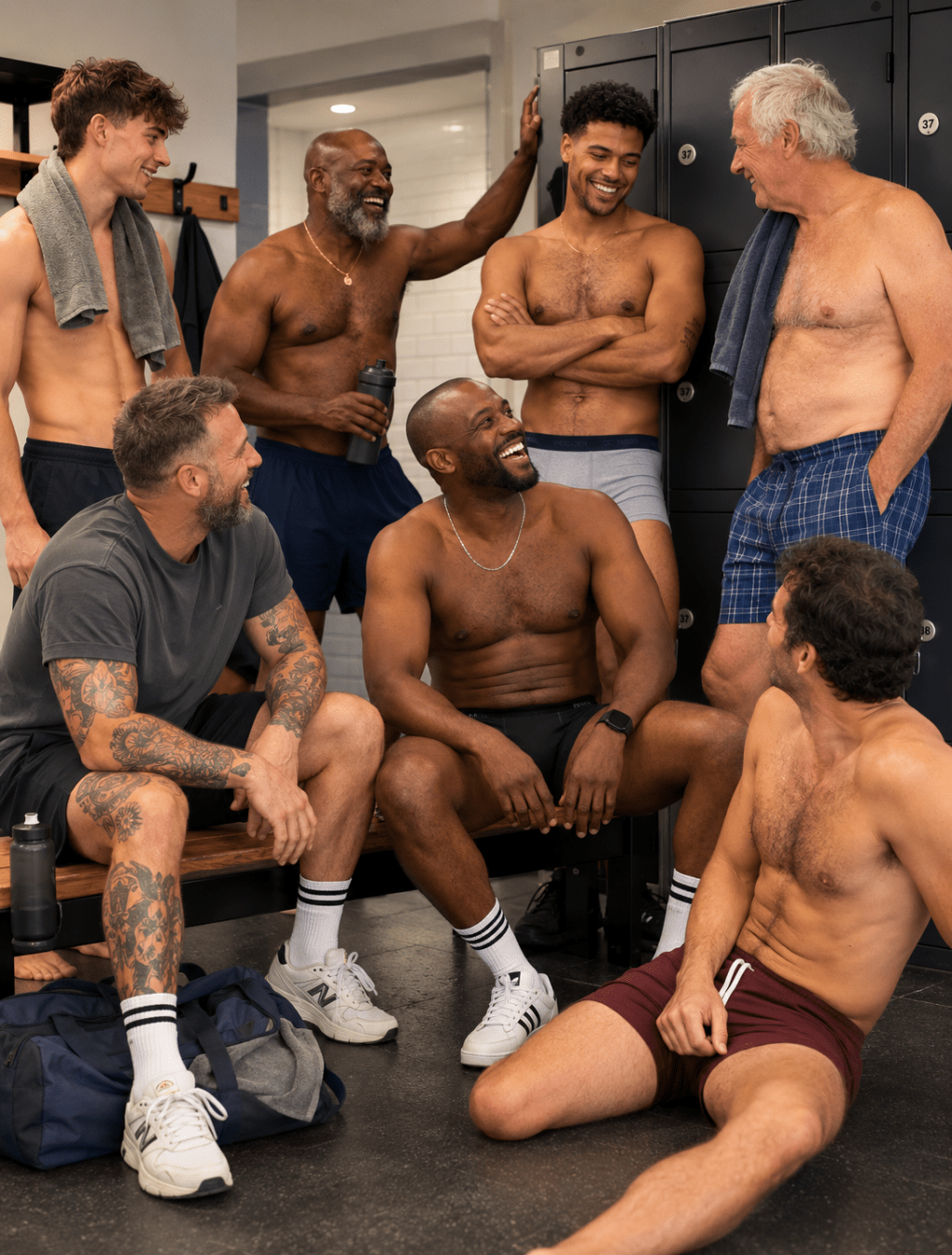
Let’s be honest: changing rooms are a bit weird.
You walk through a door and suddenly all the usual rules about clothing have disappeared. One man is attempting to change beneath a towel without revealing a single centimetre of skin. Another is strolling around completely naked as though he owns shares in the leisure centre.
Meanwhile, you are trying to remove your T-shirt without anybody seeing your stomach.
Sound familiar?
For many men, getting changed at the gym, swimming pool or sports club is not a relaxed part of the experience. It can feel like entering a room where your body is suddenly on display—and where everyone else seems more confident than you.
The important thing to know is that you are not alone.
Why do men feel anxious in locker rooms?
Men can fear locker rooms because getting changed removes the clothing they normally use to control how their body is seen. This can trigger body comparison, fear of judgement, embarrassment about nudity or memories of being teased in school changing rooms.
Some men worry about their weight. Others feel too thin, not muscular enough, too hairy, not hairy enough, too old or somehow physically different.
And yes, plenty of men worry about penis size too. We might as well say it because carefully dancing around the subject will not make anybody feel better.
According to Mental Health Foundation research into men’s body image, 28% of UK adult men surveyed had felt anxious because of concerns about their body image. One in five had dressed in ways intended to hide their body, while 22% had negatively compared themselves with others.
So no, you are definitely not the only bloke choosing the locker in the furthest possible corner.
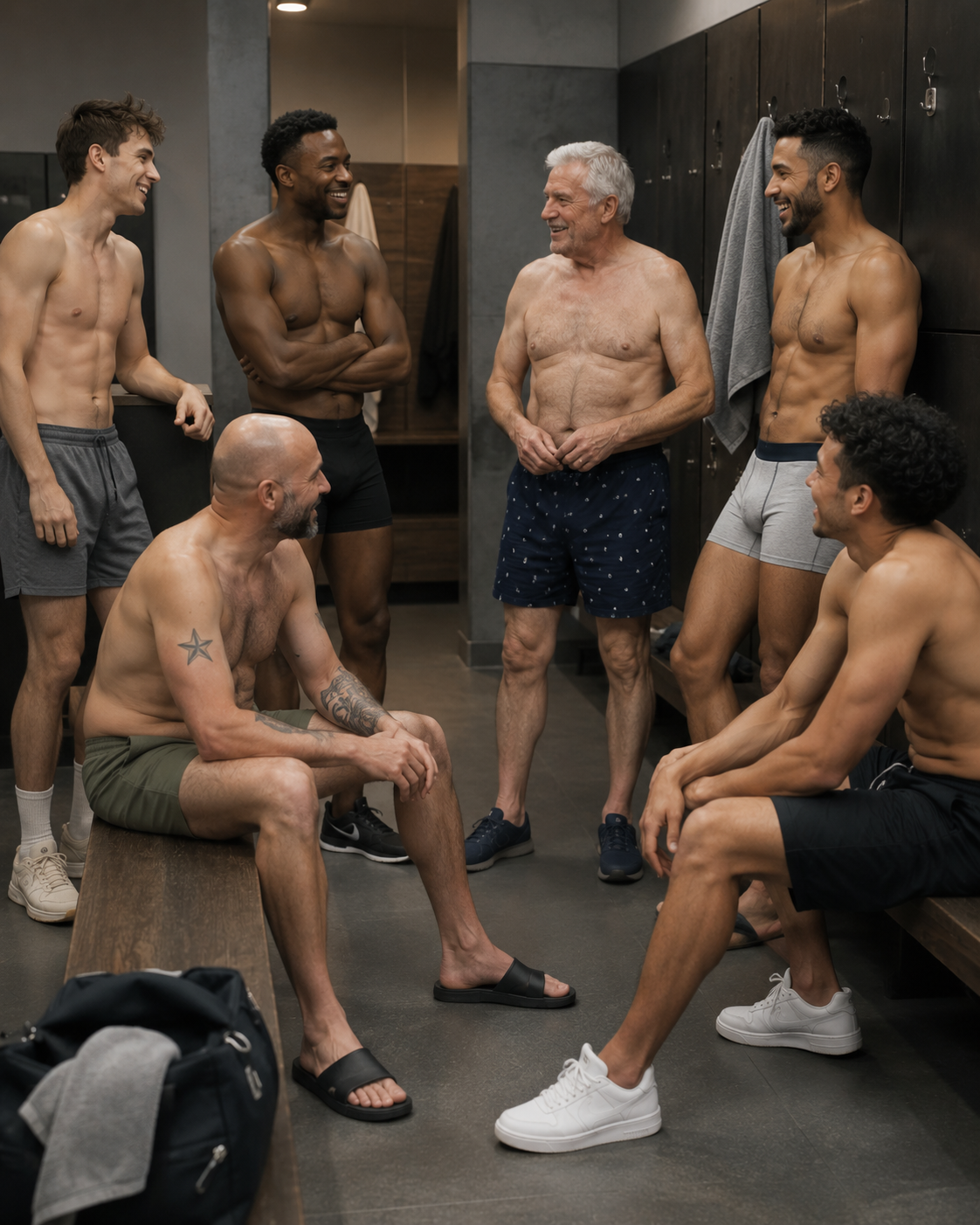
Changing rooms remove your armour
Clothing gives us control.
We can choose a T-shirt that hangs in the right place, shorts that flatter our legs or a jacket that conceals the parts of our body we feel less comfortable about.
Then we enter a changing room and that armour disappears.
Suddenly, there is nowhere to hide the stomach you normally disguise, the scar you rarely show or the body hair you have spent years wondering whether you should trim.
That feeling is not always about nudity itself. Often, it is about losing control over how other people see us.
Men compare their bodies too
Body comparison is often discussed as though it only affects women. It absolutely does not.
Men are surrounded by carefully selected versions of male bodies: actors who have trained specifically for shirtless scenes, fitness influencers under perfect lighting and dating profiles featuring somebody’s most flattering photograph from the past five years.
Then you walk into a real changing room and start ranking yourself.
He has bigger arms.
His stomach is flatter.
He looks more confident.
Before long, you are conducting a complete performance review of your body while trying to locate a clean pair of socks.
The problem is that you are comparing somebody else’s most noticeable strength with the part of yourself you feel least confident about. That was never going to be a fair contest.
School changing rooms can leave a mark
For some men, changing-room anxiety began at school.
School changing rooms could be noisy, exposed and completely lacking in privacy. They were also places where comments about weight, body hair, development or genitals were often passed off as banter.
Even if it happened years ago, your brain may still associate changing rooms with danger:
Get changed quickly. Keep your head down. Do not give anybody a reason to notice you.
Understanding where the fear came from does not instantly remove it, but it can help you recognise that your reaction has a history. It is not proof that there is something wrong with your body.
Is everybody looking at you?
One of the most common locker-room fears is simple:
What if everybody is looking at me?
Somebody might briefly glance in your direction. Humans notice movement. That is very different from carefully examining, criticising or remembering your body.
Most men in the room are thinking about themselves.
They are looking for their locker key, wondering whether their towel smells damp or attempting to put their trousers on without falling over.
The man you think is judging your stomach may be worrying about his chest. The bloke who appears completely confident may be insecure about his scars, hair loss or ageing body.
Looking confident and feeling confident are not always the same thing.
You do not have to love being naked
Body confidence does not mean loving every part of your body every minute of the day.
It does not mean you must wander around the locker room naked with a towel over one shoulder and one foot permanently resting on a bench.
You are allowed to use a cubicle. You can keep a towel around yourself. You can change quickly or choose a quieter corner.
The goal is not compulsory nudity.
The goal is to stop fear preventing you from swimming, exercising, playing sport or doing something you would otherwise enjoy.
How to overcome locker room anxiety
Start with the easiest version
You do not need to go from changing alone at home to using a packed communal shower on Saturday morning.
Visit at a quieter time if possible. Learn where the lockers, showers, toilets and private cubicles are. Simply knowing the layout can reduce some of the uncertainty.
Your first step might be changing your T-shirt in the communal area while keeping your shorts on.
Later, you might change your shorts while wearing underwear.
Eventually, you may feel able to be briefly naked while getting dressed.
The NHS recommends gradually facing situations that cause fear rather than rushing into the most difficult version. Avoidance may make anxiety feel better temporarily, but it can also allow the fear to grow.
Create a confidence ladder
Write down the changing-room situations that make you uncomfortable and rate them from 0 to 10.
For example:
- Entering the changing room fully dressed: 2
- Changing your top near other men: 4
- Changing into swim shorts while wearing underwear: 5
- Being briefly naked while changing: 7
- Using a communal shower: 9
Start with something uncomfortable but manageable. Repeat it until it begins to feel more ordinary, then move to the next step.
There is no prize for reaching the top quickly. This is body confidence, not Gladiators.
Use privacy without apologising
A towel, changing robe or private cubicle can make the experience feel more manageable.
That is not cheating.
The important question is whether privacy helps you take part or whether anxiety is making your life smaller.
Using a cubicle because you prefer privacy is perfectly reasonable. Missing every swimming session because you are terrified of entering the changing room may be something worth working on.
Your boundaries are valid. They just should not become a prison.
Stop scanning for “better” bodies
You might enter the room and immediately identify the leanest or most muscular man there.
When you notice yourself comparing, bring your attention back to why you came:
I am here to get changed.
I am here because I exercised.
I am here because swimming is good for me.
Mind’s advice for improving body image recommends noticing comparison and trying to focus on yourself as a whole person rather than one physical feature.
Your body carried you through the workout. It got you across the pool. It turned up.
That matters more than whether it looked like somebody else’s while doing it.
Challenge the commentary in your head
Listen to what you tell yourself:
“They are all looking at me.”
“I am the fattest person here.”
“I look ridiculous.”
Now ask yourself what evidence you actually have.
Try replacing those thoughts with something more balanced:
“I feel exposed, but that does not mean I am being judged.”
“There are lots of different bodies in this room.”
“I do not need to be the most attractive man here.”
“I am allowed to take up space.”
You do not have to leap straight to “I look incredible”. Your brain may reject that faster than an unexpected direct debit.
Aim for something neutral and believable.
Look at more real male bodies
Many men rarely see ordinary male bodies.
Not posed bodies. Not edited bodies. Not bodies photographed at their leanest under carefully positioned lighting.
Just bodies.
Bodies with bellies, hair, stretch marks, scars, soft chests, narrow shoulders, ageing skin and uneven muscles.
Seeing a genuine variety of men can help reset your idea of what “normal” looks like.
There is no single correct male body. There never has been.
Go with somebody you trust
Visiting the gym or pool with a friend can make the experience feel less intimidating.
You do not need to stage a dramatic heart-to-heart beside the lockers. You could simply say:
“I’m not brilliant with changing rooms, so bear with me.”
There is a decent chance he will admit that he has worried about them too.
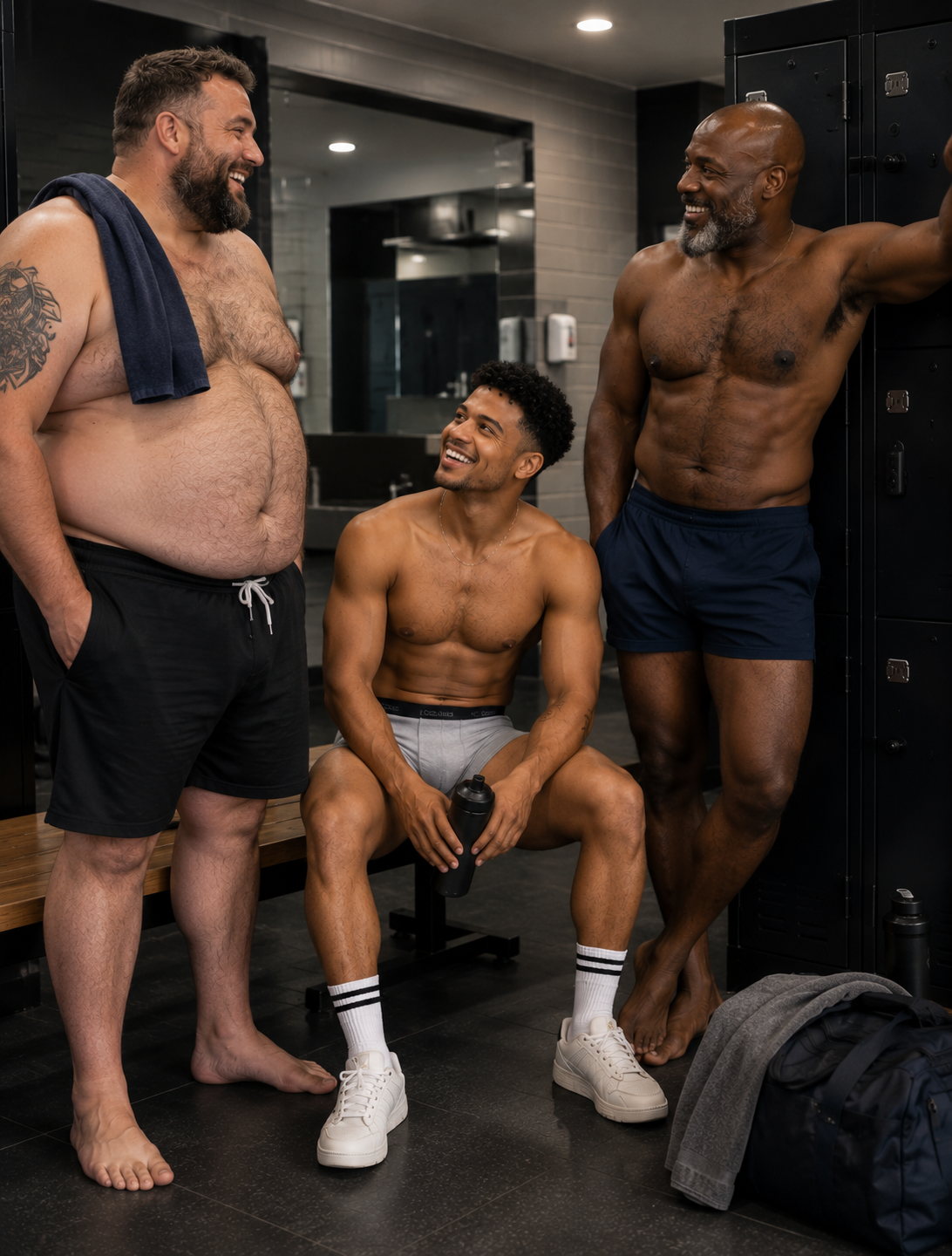
Changing-room confidence includes other men
Body confidence is not only about how you treat yourself. It is also about the environment we create for everybody else.
Do not comment on another man’s weight, genitals, body hair, scars or lack of muscle.
Do not disguise cruelty as banter.
We can be cheeky. We can have a laugh. But it should never come at the expense of somebody else’s dignity.
Give people space, avoid staring and remember that somebody using a cubicle or holding tightly to a towel may be dealing with an insecurity you know nothing about.
When should you seek extra support?
Feeling awkward while getting changed does not automatically mean you have a mental health condition.
However, consider speaking to a professional if worries about your appearance take up a large part of your day, cause serious distress or prevent you from exercising, socialising, dating or completing everyday activities.
Body dysmorphic disorder, sometimes called BDD or body dysmorphia, is a mental health condition in which somebody spends a lot of time worrying about perceived flaws in their appearance. Those flaws may be barely noticeable to other people, but the distress is very real.
You can begin by speaking to your GP. Adults living in England can also self-refer to NHS Talking Therapies without already having a diagnosed mental health condition.
Asking for support is not failing to “man up”. It is deciding that anxiety no longer gets to make your decisions.
Frequently asked questions
Is it normal to feel nervous getting naked in a changing room?
Yes. Many men feel uncomfortable being naked or partially dressed around others. Fear of judgement, body comparison, past teasing and unfamiliarity with communal nudity can all contribute.
Do I have to get completely naked at the gym?
No. You can use a changing cubicle, keep a towel around yourself or change in stages. Body confidence does not require you to abandon your boundaries.
How can I feel more comfortable in communal changing rooms?
Start with quieter visits and small, manageable challenges. Familiarise yourself with the space, use privacy where needed and gradually practise the situations that make you nervous.
Is it rude to look at another man in a changing room?
Briefly looking in somebody’s direction is normal. Staring, commenting on his body or making him feel watched is not. Concentrate mainly on your own belongings and give others space.
Can body dysmorphia cause locker room anxiety?
It can. Someone with body dysmorphic disorder may avoid situations where they believe their appearance will be noticed or judged. Speak to your GP or a talking-therapies service if body-image worries are causing significant distress.
Finally, mate…
Your discomfort does not prove that you do not belong in the changing room.
It simply means this is an area where your confidence may need a little patience and practice.
Take one manageable step. Keep your boundaries. Stop expecting your body to meet a standard that most real male bodies never have.
The other men in that room are not a panel of judges.
They are just men changing their clothes, carrying their own insecurities and occasionally forgetting which locker they used.
Your body is not preventing you from belonging.
It is the reason you do.
Sources and further support
- Mental Health Foundation: Millions of men affected by body-image issues
- NHS Every Mind Matters: Facing your fears
- Mind: Tips for improving your body image
- NHS: Body dysmorphic disorder
- NHS: Find NHS Talking Therapies
This article provides general information and reassurance and is not a substitute for individual medical or mental-health advice. Speak to your GP or another qualified healthcare professional if concerns about your body are causing significant distress or affecting your everyday life.


Leave a Reply