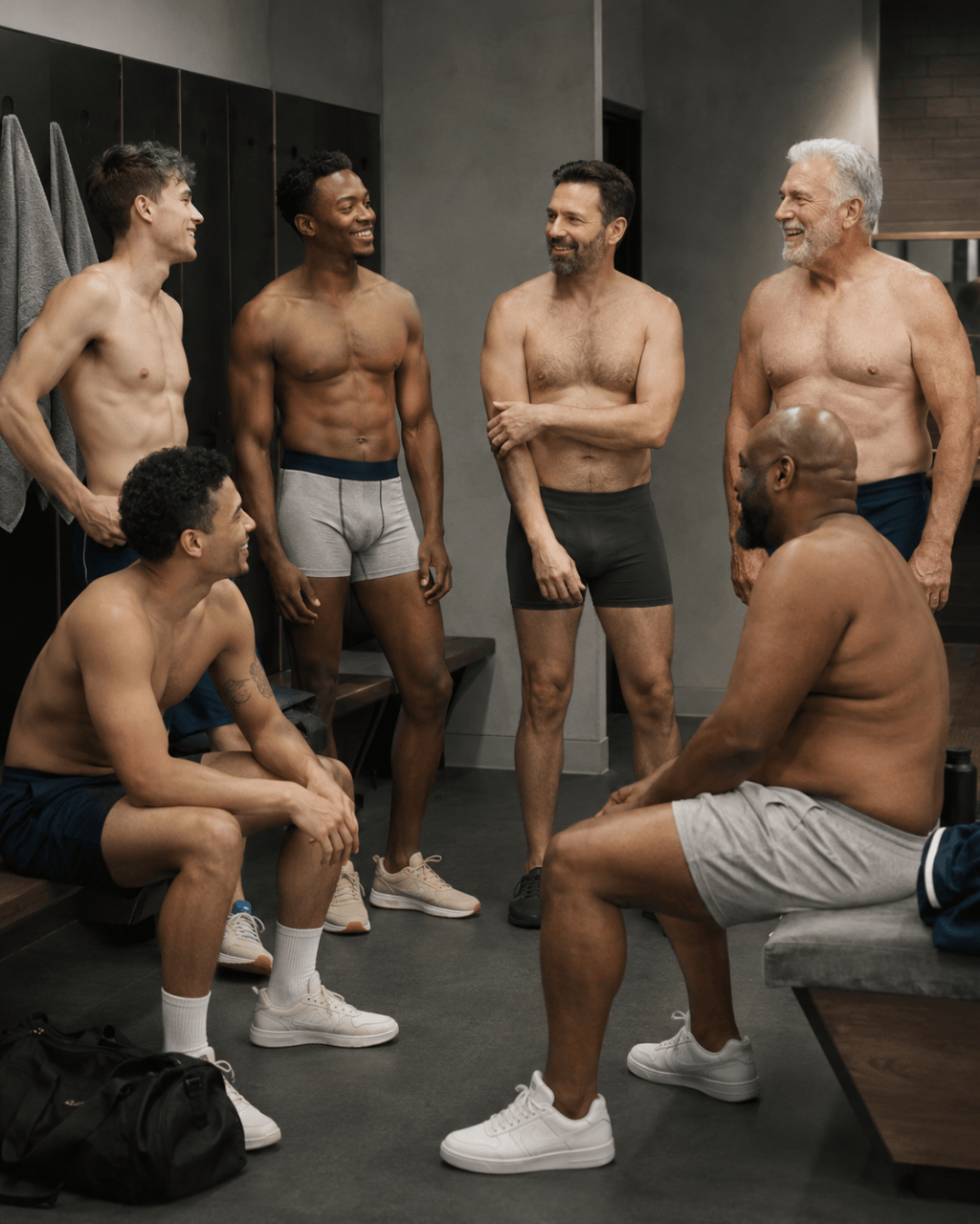
Most respondents to our Gents Body Confidence survey felt comfortable getting naked around other men. Nearly nine in ten still compared their bodies. So what happens between dropping the towel and getting dressed?
There’s a particular changing-room manoeuvre that deserves its own Olympic event: getting your pants on underneath a towel without flashing anyone, falling over or accidentally wrapping yourself in yesterday’s socks.
Some men have mastered it. Others strip off, have a shower and carry on discussing the football as though they’re fully dressed.
Both are perfectly valid approaches. But what’s going on in our heads while we’re getting changed? And when someone cracks a joke about another bloke’s body, is everyone actually laughing?
I asked men about nudity, body confidence, comparison and banter through the GBC Changing Room Survey. The 93 responses give us plenty to talk about.
Happy to strip off? Quite a few of us are
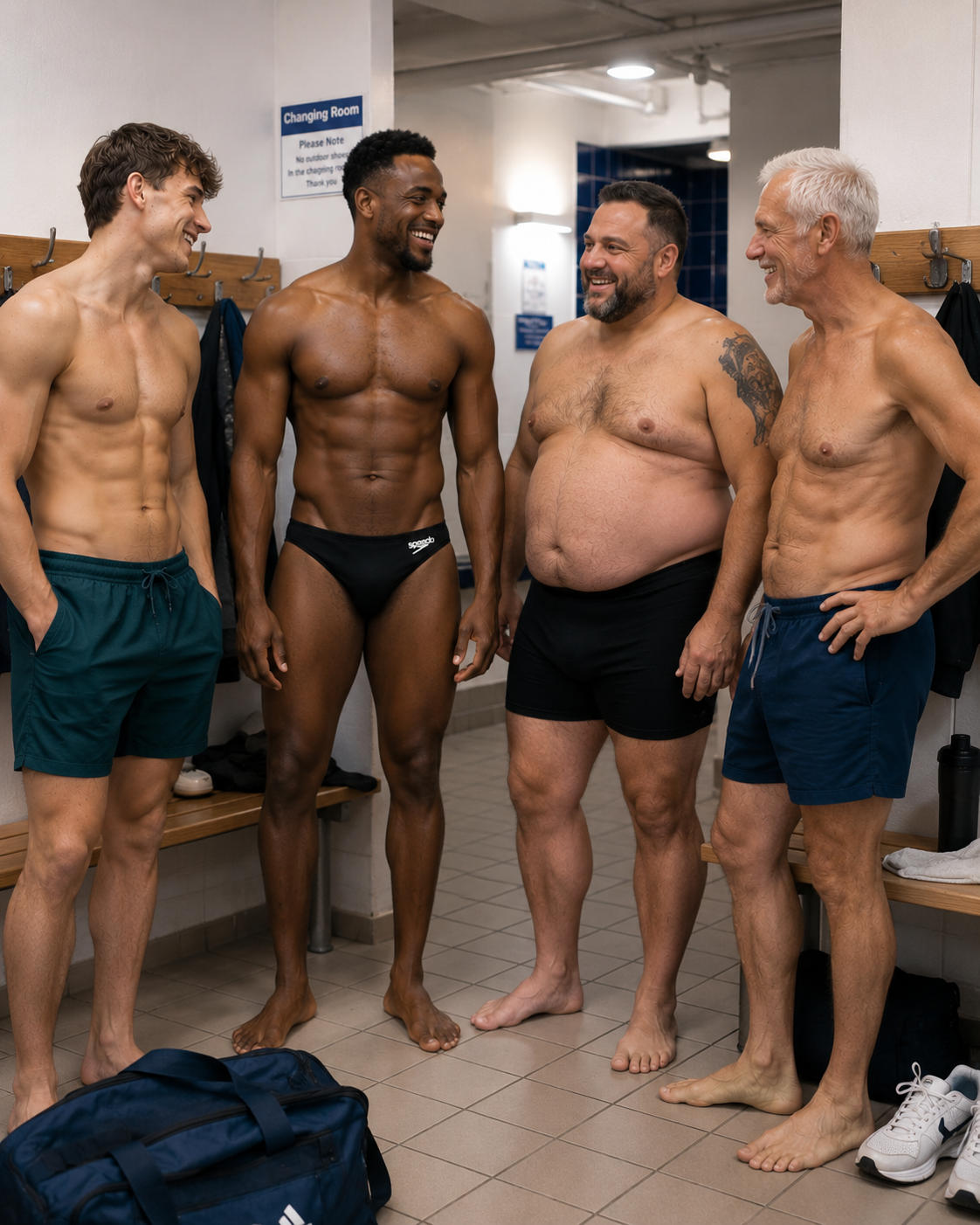
In this survey, 76% of respondents felt very or somewhat comfortable being completely naked in front of other men. That included 32% who were very comfortable and 44% who were somewhat comfortable.*
Another 13% felt uncomfortable, while 11% sat in the middle.
When asked what they usually do while changing, 53% said they strip off without really thinking about it. Around a quarter get naked but try to be discreet. Others keep a towel around them, seek out a cubicle or adapt to the situation.
That’s a fairly broad range of changing-room habits. There’s the man who’s dressed again before you’ve found your locker key, and the one somehow managing a full conversation with a towel balanced on one shoulder.
But comfort with nudity is personal. Keeping yourself covered doesn’t need an explanation. Neither does getting changed openly in a space intended for it.
Nobody owes the changing room a performance of confidence.
The comparison habit is much more common
Here’s the finding that really caught my attention: 88% said they compare their bodies with other men in changing rooms, either regularly or sometimes.
Almost half—48%—said they do it regularly.
And those answers weren’t limited to respondents who felt uncomfortable being naked. Of the 71 who felt comfortable, 62 also said they compare themselves regularly or sometimes.
So you can be perfectly happy dropping your towel and still have a running commentary in your head.
He’s got broader shoulders. His stomach’s flatter. Am I hairier than everyone else? How does that bloke look so composed while I’m trying to retrieve a sock from a puddle?
The survey didn’t ask whether every comparison was negative. A passing observation and a brutal internal critique are different things. We shouldn’t assume everyone who notices another man’s body feels worse afterwards.
What these responses suggest is that being comfortable naked and being free from comparison are separate experiences. They can happily—or less happily—coexist.
Confidence isn’t always at either extreme
On the five-point body-confidence scale, 44% chose the middle score of three. Another 43% chose four or five, while 13% chose one or two.
For many respondents, confidence seems to sit somewhere between loving every inch and wanting to hide behind the nearest locker.
When we asked what influences comfort with nudity:
- 52% selected how they feel about their own body.
- 45% selected comparing themselves with other men.
- 46% selected how relaxed and accepting the other men are.
- 30% selected concerns about penis size or appearance.
Respondents could select up to three factors, so these percentages overlap.
Those similar figures for comparison and the atmosphere around us are worth pausing over. We bring our own thoughts into a changing room, but the people sharing it matter too.
There’s room to make that space feel easier without anyone having to change their body first.
Yes, penis worries came up
Almost a third selected penis size or appearance as something influencing their comfort.
It’s a personal topic, and one that can be difficult to discuss without someone immediately reaching for a punchline. That doesn’t make the concern trivial.
A changing room also gives you a very narrow glimpse of someone else’s body. It tells you nothing about how comfortable they feel in it.
The bloke you’ve decided has nothing to worry about might be having his own internal debate about his stomach, scars, body hair or something you haven’t even noticed.
We’re remarkably good at assuming everyone else got the confidence instruction manual.
Banter: a mixed reception
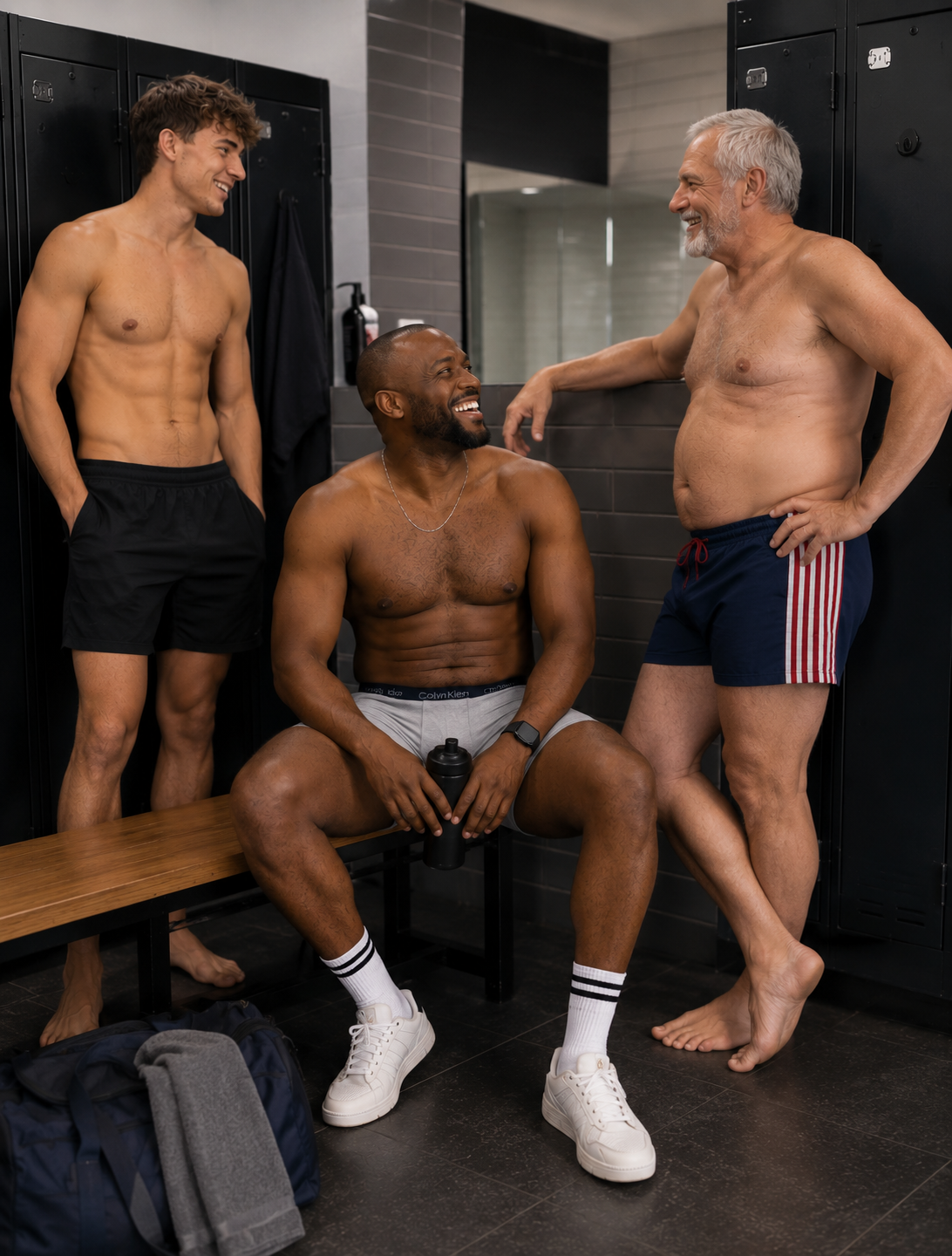
The stereotype of a changing room full of constant body-related jokes wasn’t everyone’s experience.
34% had encountered body-related banter occasionally or very often. Another 34% said rarely, 27% said never, and 4% hadn’t spent time in those environments.
Among the types witnessed or taken part in, comments about body shape or weight were selected by 39%, while jokes about penis size or appearance were selected by 31%.
Yet 51% said they prefer not to join in with banter about other men’s bodies. Only 2% said they regularly do.
When asked how that banter usually makes them feel, 28% said it depends on the person and context. 22% felt self-conscious or uncomfortable, compared with 6% who felt more relaxed and included. Another 4% described it as harmless fun.
Those answers make it difficult to claim that everyone enjoys it.
A joke can feel affectionate between close mates. The same words from a stranger might land very differently. And being quiet—or laughing along—doesn’t necessarily tell you what someone thinks about it.
Where does “only joking” cross the line?
The written responses repeatedly raised personal attacks, humiliation, repeated targeting and carrying on after someone wants it to stop. One of the newer responses described the shift as “When it goes from generally to personally”.
One respondent put it simply:
“What is harmless to one, may be harmful to another.”
He went on to explain that comments about body hair could make him more self-conscious because it was already something he disliked about himself.
Another described the line as:
“When it’s words they know you don’t like and you’ve asked them to stop and they don’t.”
There was room for a positive view of banter too:
“As long as there’s no pressure and it’s done in good humour it’s all ok”
For me, that’s the useful distinction: pay attention to the person receiving it. Your intention matters, but so does their experience.
“I was only joking” is an explanation. It isn’t a reset button.
And we can absolutely keep the humour. There’s plenty of material in the locker key that’s vanished, your mate forgetting his towel again or the shower with two settings: Arctic expedition and freshly boiled kettle.
This fits into a wider conversation
Men’s body image deserves attention beyond the changing-room doors.
In a 2019 YouGov survey for the Mental Health Foundation, involving 2,103 male respondents, 28% of men reported having felt anxious because of body-image issues. 21% said body-image concerns had led them to dress in ways that concealed their body or parts of it during the previous year.
That research asked different questions of a different sample, so it isn’t directly comparable with ours. It does provide wider context for why these conversations matter.
Source: Mental Health Foundation, male body-image findings, November 2019.
A changing room we can all feel comfortable in
The responses leave me thinking about a few simple habits.
Let people choose how much privacy they want. Avoid turning someone’s body into the group’s entertainment. If a joke lands badly, stop rather than debating whether they should find it funny. And remember that someone who looks confident can still have insecurities.
We don’t need to inspect everyone’s feelings before mentioning the football. We can just be decent to each other.
At GBC, I want us to make room for different bodies and different levels of confidence. Comfortable naked, towel firmly secured or somewhere in between—you belong in that conversation.
What makes a changing room feel welcoming to you? And has banter ever helped—or knocked—your confidence?
Keep comments respectful and avoid naming anyone involved. There’s no need to share anything you’d rather keep private.
About the research: Updated 23 October 2026. This article uses 93 survey submissions received between 9 and 18 October 2026, checked against the live Google Forms results on 23 October. Respondents were self-selected, so the findings describe this sample and should not be treated as representative of all men. Most submissions (82%) came from respondents aged 35–64, and 52% reported experience of naturist settings. The original export contains one pair of identical answer sets submitted two seconds apart; both were retained because we cannot confirm they came from the same person. Counts refer to submissions, not verified unique individuals. Percentages are rounded independently, so combined figures may differ slightly from the sum of their parts. Multiple-choice checkbox totals can exceed 100%. All quotations are from respondents who explicitly agreed to anonymous quotation; names and identifying details are omitted.


Leave a Reply