Men’s body confidence is no longer a niche issue or a passing trend. In 2026, male body image has become a major topic affecting mental health, relationships, self-esteem, and how men show up in everyday life.
Social media comparison and unrealistic physiques contribute to body anxiety. Concerns about nudity and penis size also affect men. They are increasingly questioning how they look and whether they measure up. Yet many still feel uncomfortable talking about it openly.
This article explores the current state of men’s body confidence, why it matters, and how greater representation of real, diverse male bodies is essential to improving mental wellbeing.
What Is Men’s Body Confidence?
Men’s body confidence refers to how comfortable, accepting, and secure a man feels in his own body — both clothed and naked. It’s shaped by physical appearance, cultural expectations, masculinity norms, and social comparison.
For decades, male body image issues were overlooked or dismissed. Confidence was assumed to be something men simply “had.” In reality, many men experience deep insecurity about their weight, muscle mass, height, ageing, hair loss, and genital size.
In 2026, the conversation has shifted. More men are acknowledging that body confidence is not automatic — it is built, influenced, and often challenged.
The Rise of Male Body Image Issues
Body image concerns among men have increased significantly over the past two decades. Historically, female body image dominated public discussion, while men were expected to remain stoic and unaffected.
Today, research and lived experience show that:
- A large proportion of men feel dissatisfied with their appearance
- Many men avoid situations involving nudity, such as gyms, swimming, or intimacy
- Body dissatisfaction is linked to anxiety, depression, and low self-esteem
Men now face pressure from multiple directions. Fitness culture, fashion, dating apps, and social media all play a role. They reinforce narrow ideals of what a “good male body” looks like.
Social Media and Male Body Comparison
Social media plays a central role in shaping men’s body confidence. Platforms are saturated with images of lean, muscular, youthful bodies — often edited, filtered, or enhanced through lighting and posing.
For many men, repeated exposure leads to:
- Increased comparison
- Feelings of inadequacy
- Unrealistic expectations about muscle, fat, and appearance
Unlike previous generations, today’s men compare themselves not only to celebrities, but to peers, influencers, and strangers online. This constant visual benchmarking can distort reality and erode confidence.
Importantly, it’s not social media itself that causes the problem — it’s the lack of visible, normal, diverse male bodies that reflect real life.
Nudity and Male Body Confidence
One of the least discussed aspects of male body image is how men feel about their bodies when naked.
For many British men, nudity is deeply uncomfortable. Being naked removes clothing as armour and exposes perceived flaws — stomach, chest, body hair, scars, and genital appearance.
Common concerns include:
- Feeling unattractive when undressed
- Fear of being judged by partners
- Avoidance of mirrors, locker rooms, or intimacy
Nudity forces honesty. And in a culture that rarely shows real naked male bodies outside of pornography or extreme fitness imagery, many men feel they don’t measure up.
Penis Size Anxiety and Male Self-Worth
Penis size anxiety is one of the most persistent and misunderstood male body confidence issues.
Despite medical evidence showing that most men fall within a normal size range, many believe they are inadequate. This belief is reinforced by:
- Pornography
- Cultural jokes and stereotypes
- Silence around the topic
For some men, penis size anxiety affects:
- Sexual confidence
- Intimacy
- Mental health
- Relationships
The issue is rarely about size itself. It is about comparison, masculinity, and the fear of not being enough. Open discussion and accurate representation are crucial to dismantling these myths.
You can view our article on penis size here.
Mental Health and Men’s Body Image
Body confidence is not superficial. It has direct implications for mental health.
Men who struggle with body image may experience:
- Anxiety and low mood
- Avoidance of social situations
- Reduced sexual confidence
- Shame and isolation
Men are also less likely to seek help or talk openly about these feelings. Cultural expectations still frame male vulnerability as weakness, making body image struggles something many men carry alone.
Addressing men’s body confidence is therefore a mental health issue, not a cosmetic one.
The Importance of Real Male Representation
One of the most effective ways to improve men’s body confidence is simple: show real bodies.
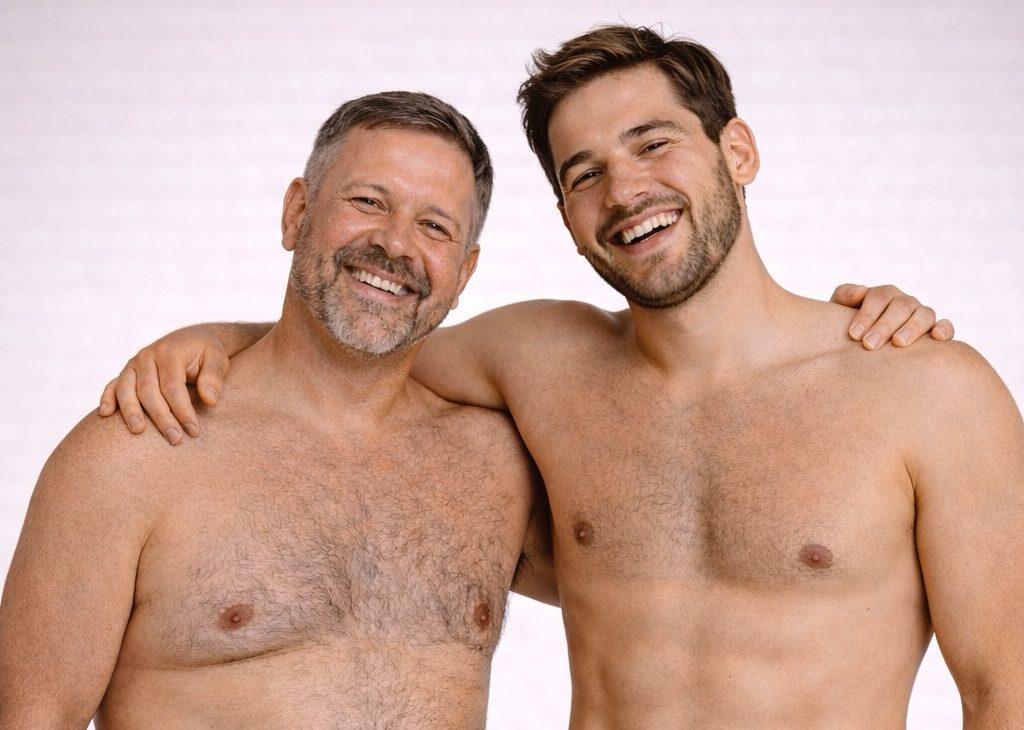
Representation matters. Seeing men of different ages, sizes, ethnicities, abilities, and life stages helps redefine what “normal” looks like.
When men see unfiltered bodies that resemble their own, it:
- Reduces shame
- Normalises diversity
- Encourages self-acceptance
- Creates permission to talk
Platforms and communities that prioritise honesty, diversity, and realism play a vital role in shifting the narrative around male bodies.
You can view real stories and see real bodies in our article here.
Men’s Body Confidence in 2026: Where We Are Now
In 2026, men’s body confidence sits at a crossroads.
On one side:
- Increased pressure
- Hyper-visibility
- Comparison culture
On the other:
- Growing awareness
- More open conversation
- Communities pushing back against unrealistic standards
The direction this goes depends on one key factor. Will men continue to see only ideals? Or will they start seeing themselves reflected back honestly?
Why Men’s Body Confidence Matters
Men’s body confidence affects:
- Relationships
- Sexual wellbeing
- Mental health
- How men age
- How men treat themselves and others
A confident man is not one with a perfect body. He is one who understands his body, accepts its changes, and feels worthy regardless of comparison.
Improving men’s body confidence is not about lowering standards — it’s about widening them.
Final Thoughts
Men have bodies. Men have insecurities. Men deserve spaces where those realities are acknowledged without judgement.
Conversations around male body image continue to grow. Real representation is important. Honest discussion and community play crucial roles.
Confidence does not come from chasing perfection.
It comes from visibility, acceptance, and knowing you are not alone.
And that is exactly where the future of men’s body confidence must head.





 High Street Gent's Body Confidence
Leave a comment